
James
Biss
Where the art of deception meets the science of wonder.
A Canadian writer, theatrical creator, and mentalist whose work has been presented across five continents — and who has spent three decades studying how people are persuaded, deceived, and astonished.
James Biss Is Now Writing on Substack
Brand-new writing, sent straight from the desk at Winston Manor Press — and a free subscription is all it takes to read it.
The Substack is where the work appears first: fresh pages drawn from current projects, including The Secret Adventures of Sherlock Holmes, along with the discoveries, digressions, and notes from the workshop that never make it into a finished book.
Free subscriptions are open to everyone. Add your name, and each new piece arrives by email as it is written.
Free subscription · New writing as it happens

The Man Behind the Mystery
James Biss is a Canadian writer, theatrical creator, and mentalist whose work has been presented across five continents. He has spent three decades professionally studying how people are persuaded, deceived, and astonished — which makes him, he admits, a natural Sherlockian.
His books, Messing With Minds and Mind Blowing, are both acclaimed works within the world of mentalism. His theatrical productions — The Demon Haunted Cottage, Mental Telepathy for Dummies, The Ghost Experience, Lies, Damn Lies & Magic Tricks, and Mysteries & Lies — have challenged audiences to question what they perceive, remember, and believe.
"Like Holmes, he has retired to the country — to the southern slope of the downs, where the life of Nature soothes those long years once spent amid the gloom of the city."
He shares one additional characteristic with Jefferson Hope: a firsthand acquaintance with the frailties of the ascending aorta. Thirteen years after emergency open-heart surgery and the installation of a Dacron graft, he remains bewildered by his good fortune and deeply attentive to the rhythm of the heart that allows him to pursue it.
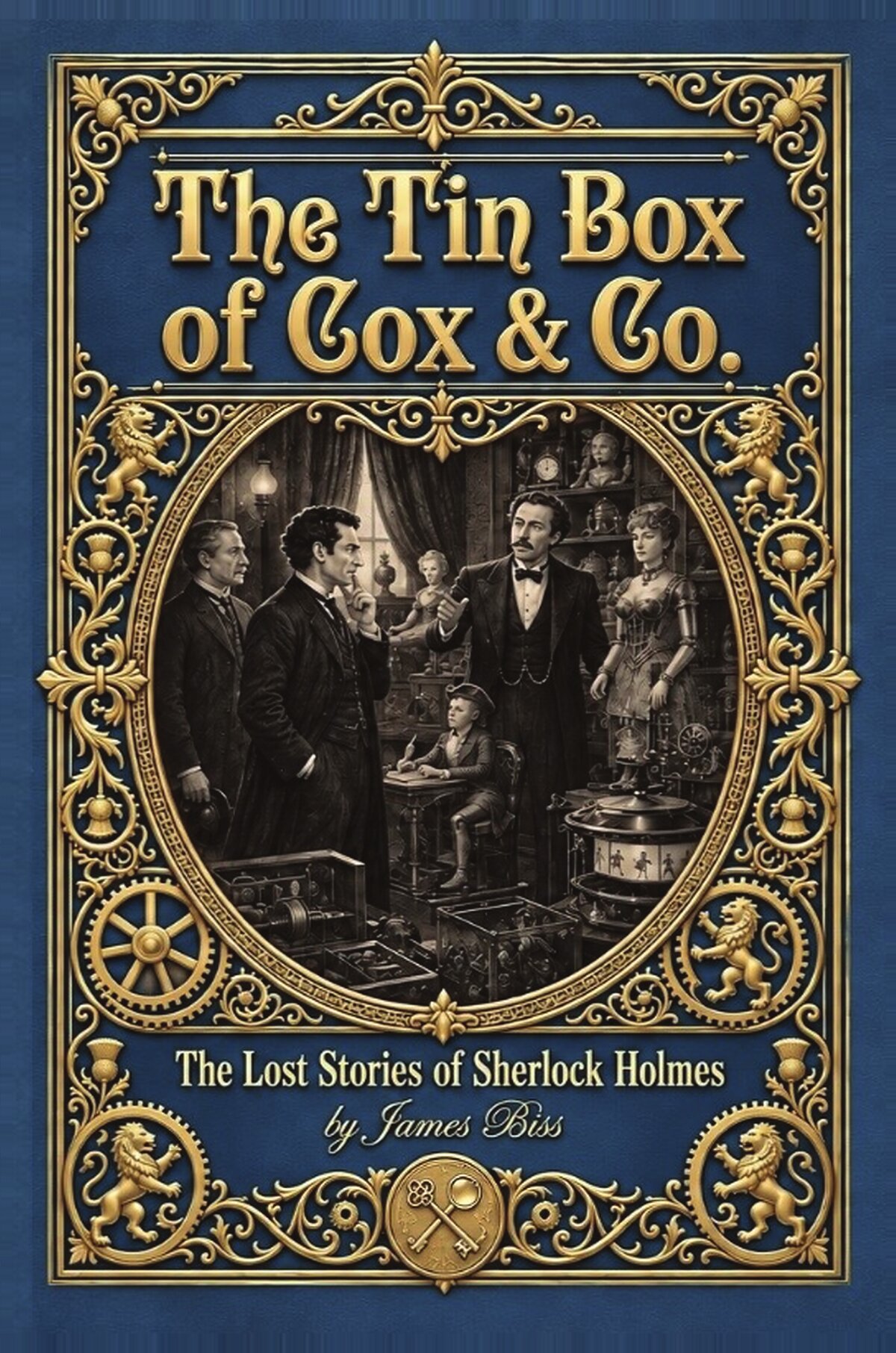
The Tin Box of Cox & Co.
The Lost Stories of Sherlock Holmes
The box has been opened. Thirteen of the untold cases — the stories Watson mentioned but never told — written in full, in the authentic voice of the Canon.
Available now at fine bookshops world-wide, and online.
"Somewhere in the vaults of the bank of Cox and Co., at Charing Cross, there is a travel-worn and battered tin dispatch-box with my name, John H. Watson, M.D., Late Indian Army, painted upon the lid." — "The Problem of Thor Bridge"
For over a century, that sentence has been the most tantalising promise in all of detective fiction. Watson told us the box existed — crammed with records of cases "to illustrate the curious problems which Mr. Sherlock Holmes had at various times to examine" — and then he left it in the dark. The lost cases. The names dropped in passing and never explained.
- The Giant Rat of Sumatra
- Ricoletti of the club foot and his abominable wife
- The madness of Isadora Persano
- The Grosvenor Square furniture van
- A politician, a lighthouse, and a trained cormorant
This is the book that opens the box.
The Tin Box of Cox & Co. gathers thirteen of the untold cases, written as full investigations in the authentic voice of the Canon. Each case is followed by a "Beyond the Story" essay in which James Biss traces the historical truth behind the fiction: the real science, the real Victorian oddities, the stubborn facts of history hiding inside the impossible.
These are the strangest, darkest, and most daring cases Holmes and Watson ever faced — adventures moving through science and superstition, theatre and politics, faith and fraud, the machinery of Empire and the quieter machinery of reputation. Here Holmes is permitted not only to triumph, but to remember his mistakes and to confront mysteries he cannot entirely mend. Women whom the original chronicles dismissed as victims or eccentrics become the authors of their own designs. Historical figures — H. G. Wells, Harry Houdini — walk into Baker Street not as famous visitors, but as men whose ideas challenge Holmes himself.
From the horrors of the club-footed Ricoletti to the matchbox of Isadora Persano, from a vanishing furniture van to the nightmare of Spring-Heeled Jack, these thirteen cases span the full range of the Holmesian world: mischievous, theatrical, unexpectedly tender — and, in the closing story, darker than anything the Canon ever dared.
James Biss brings to the project the eye of a theatrical creator, mentalist, and lifelong student of astonishment, together with the scholarship behind the acclaimed Finding Sherlock Holmes series — the internationally recognised restoration work of Finding A Study in Scarlet, Finding The Sign of the Four, The Secret Adventures of Sherlock Holmes, and Killing Sherlock Holmes. This time the documents led him to the door — and the author opened it.
For collectors, Sherlockians, and anyone who has ever wondered what was inside the box — a lavish anthology in the exact style of the classic Strand format.
"Considerably more than competent pastiche — intelligent, atmospheric and often genuinely unsettling."
"Makes a persuasive case for its existence… the best Holmes stories are ultimately about something more troubling than crime."
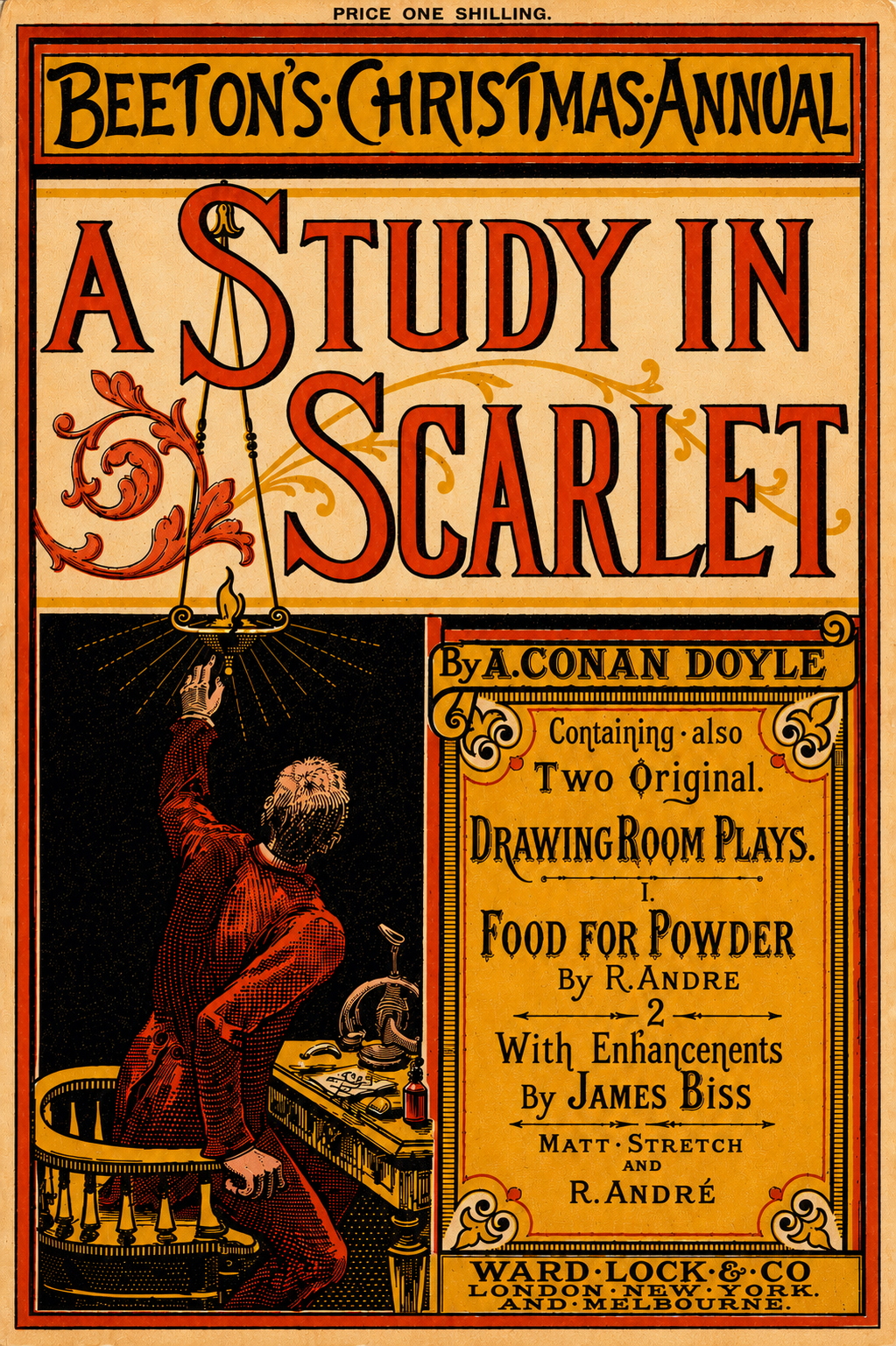
Finding
A Study In Scarlet
An extraordinary encounter with one of the rarest surviving copies of the 1887 Beeton's Christmas Annual — the very volume in which Sherlock Holmes first appeared before the world.
This copy bears an additional distinction: on page 90, line 23, a capital "I" is missing — a mechanical flaw of the absolute first press hours. Only three such copies are believed to exist.
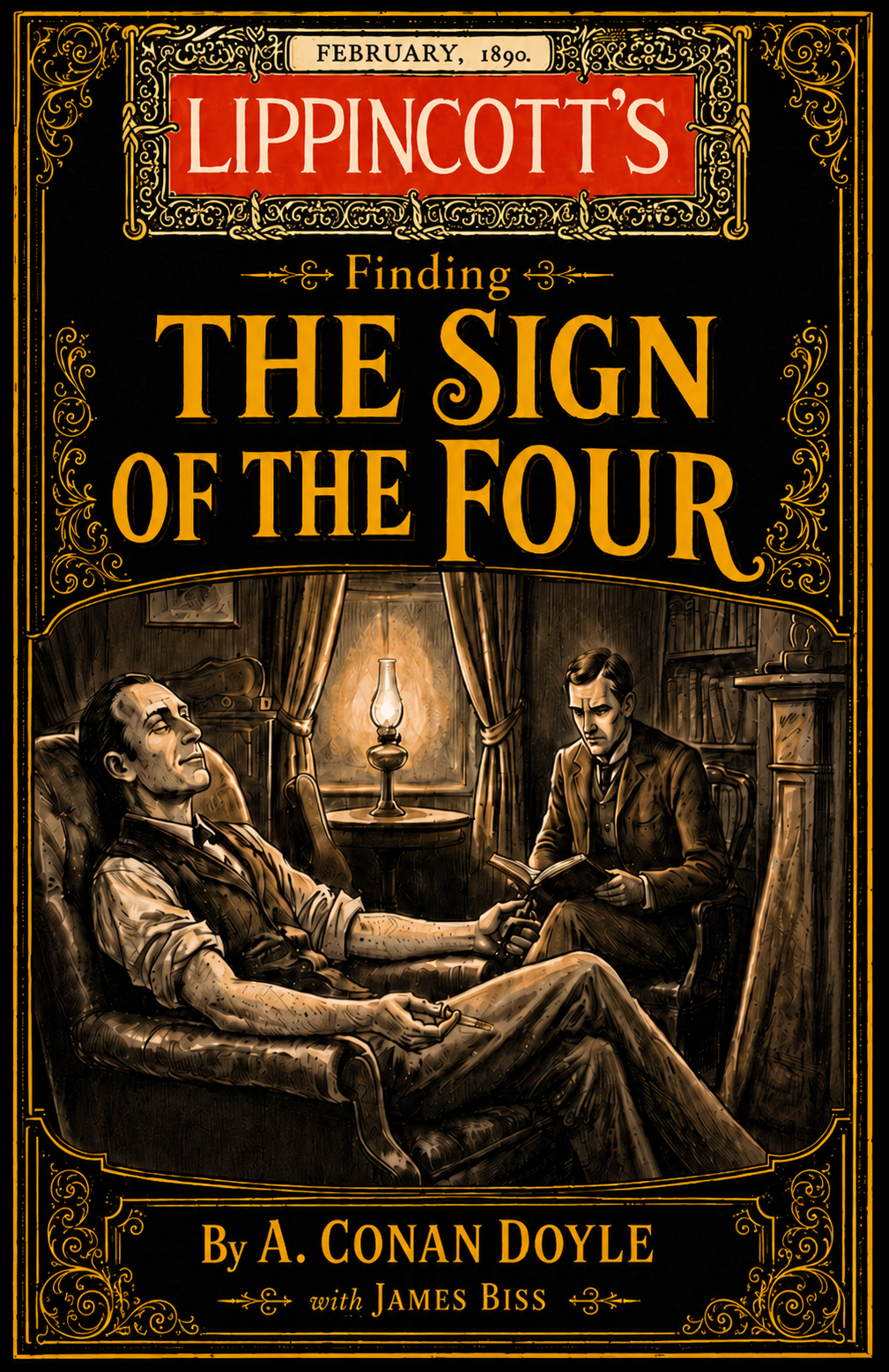
Finding
The Sign of the Four
Following the enthusiastic early response to Finding A Study In Scarlet, James Biss continues his bibliographic journey through the birth of Sherlock Holmes — an illustrated sequel devoted to the strange, indulgent, and decisive second appearance of the world's greatest detective.
Before Baker Street became immortal in The Strand Magazine, Holmes returned in an American monthly. In February 1890, Lippincott's published The Sign of the Four — darker, stranger, and more mature than what came before, and the last Holmes novel before the Strand short stories changed everything.
The Secret Adventures of Sherlock Holmes
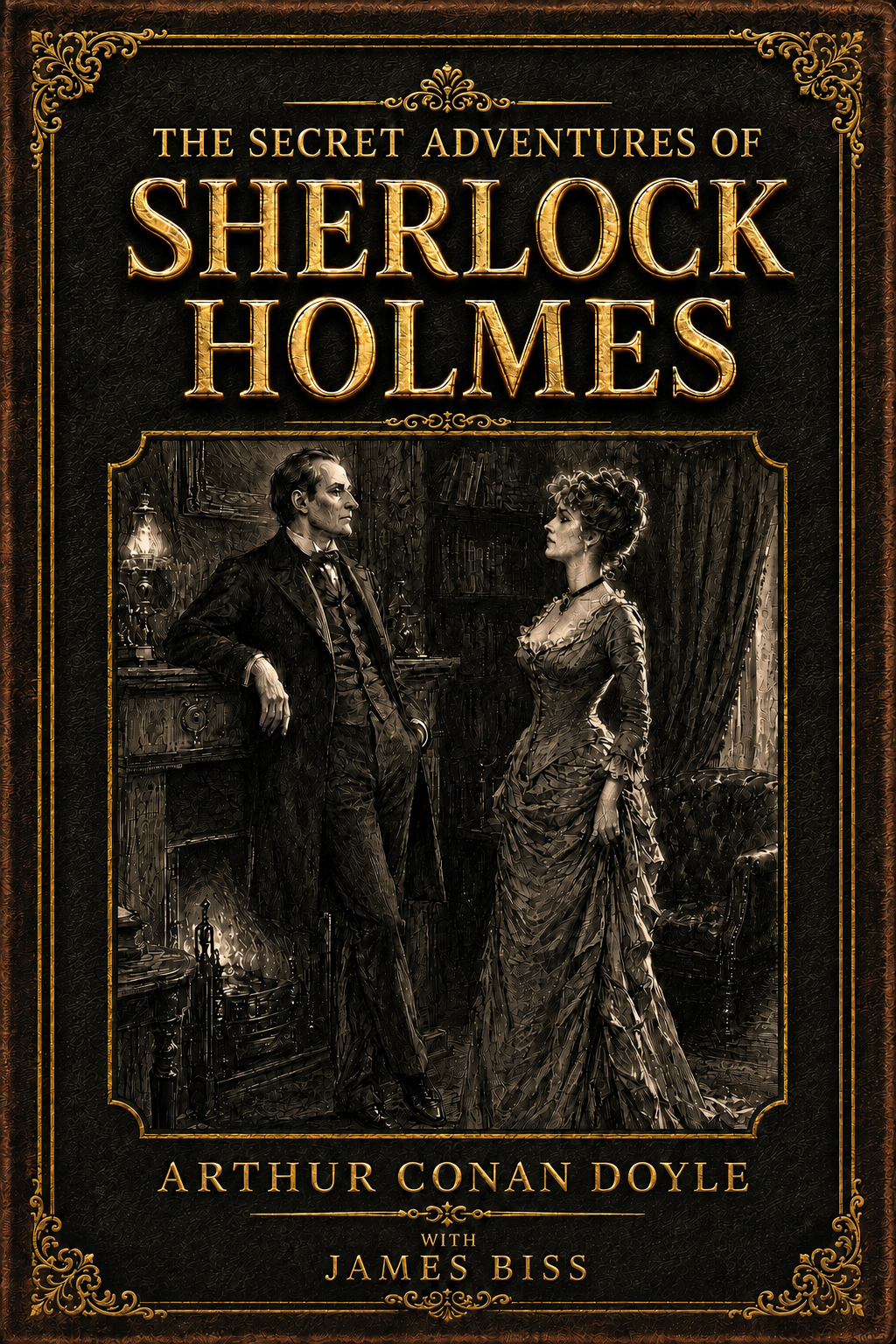
NOW AVAILABLE! James Biss's new book has arrived world-wide — carried to readers on five continents by the international reception of his earlier works. It is not merely a volume of adventures, but a carefully assembled record of Holmes's earliest published investigations, presented as Victorian readers first met them in The Strand Magazine.
Watson's original accounts stand substantially as first written, now enriched by the annotations of James Biss — the historical persons, places, scientific methods, and publishing history that surrounded their first appearance. The collection closes with a previously unpublished manuscript, "An Affair in Africa," which carries Holmes and Watson far beyond the fogs of Baker Street into British East Africa.
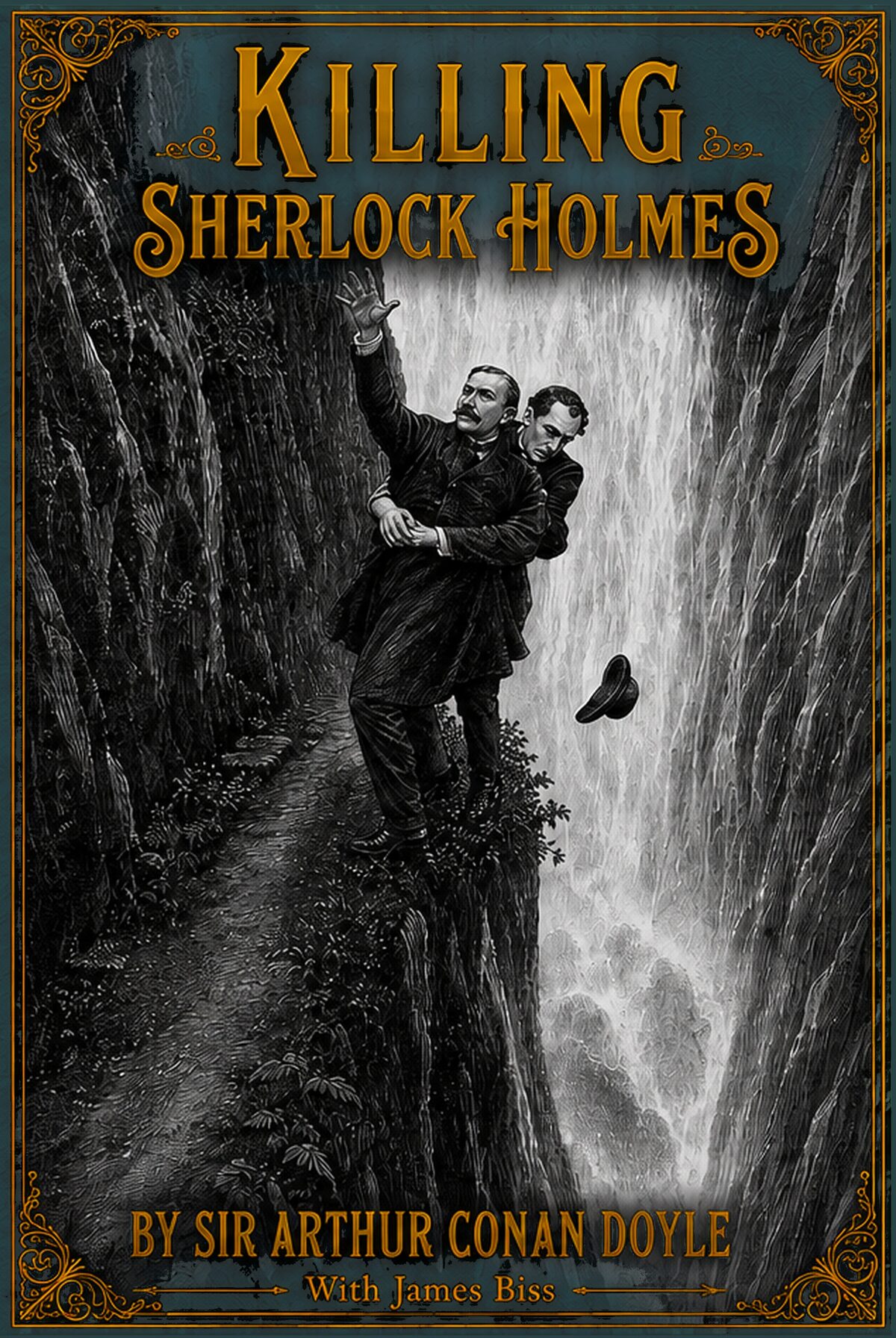
Killing Sherlock Holmes
The Memoirs of Murder
A digitally remastered treasury of Conan Doyle's original Strand Magazine stories — restored, annotated, and completed at last.
Available now at fine bookstores everywhere, and online.
Where did Holmes go — and who was waiting for him?
In 1893, Arthur Conan Doyle sent Sherlock Holmes over the Reichenbach Falls, locked in the arms of Professor Moriarty, and the world mourned. This volume gathers all the preceding stories from The Memoirs of Sherlock Holmes in their original Strand publication order, digitally remastered from rare period sources with Sidney Paget's iconic illustrations painstakingly restored — every line, tone, and shadow recreated with fidelity to the Victorian originals, sharper and cleaner than most readers have ever seen them.
But this edition offers something no reader has seen before: "The Case of the Caspian Widow," an unpublished work set during the Great Hiatus, the three lost years between Reichenbach and Holmes's return. Here, amid the Trans-Caspian railway and the shadows of Persia and Tibet, Holmes crosses paths once more with Irene Adler — now travelling under the name Adrienne — in a story that finally answers where Holmes went, and who was waiting for him.

Complete with scholarly annotations by the internationally acclaimed Sherlockian, James Biss, and the same meticulous restoration behind the acclaimed Finding Sherlock Holmes series, this is both a tribute to Doyle's original Memoirs and a new chapter in the Holmes canon.
For collectors, Sherlockians, and anyone who has ever wondered what really happened during the missing years.